Surveys that listen, then ask.
AI-powered follow-ups turn a static microsurvey into a short, situational conversation — picking the next question based on what the user just said.
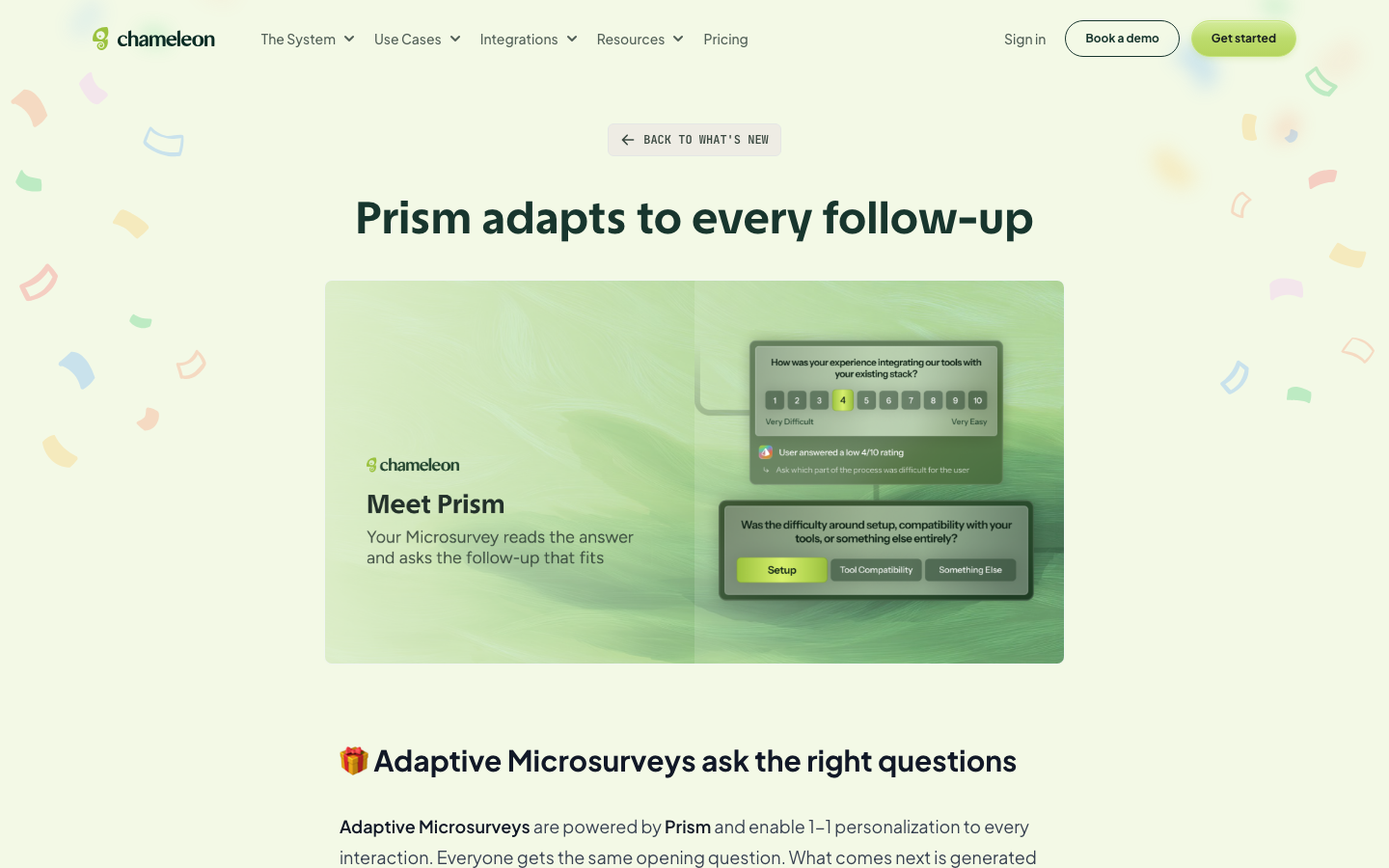
Two questions, asked well, beat ten about.
Microsurveys live in a tight window — the user is mid-task, the question is in-app, the cost of being boring is high. Traditional surveys solve that with brevity. But brevity also caps how much you can learn: a "thumbs up / thumbs down" tells you sentiment, not why.
Adaptive Microsurveys try to thread that needle. Ask one short question. Based on the answer, pick the most useful follow-up. Cap at two. Get out of the way.
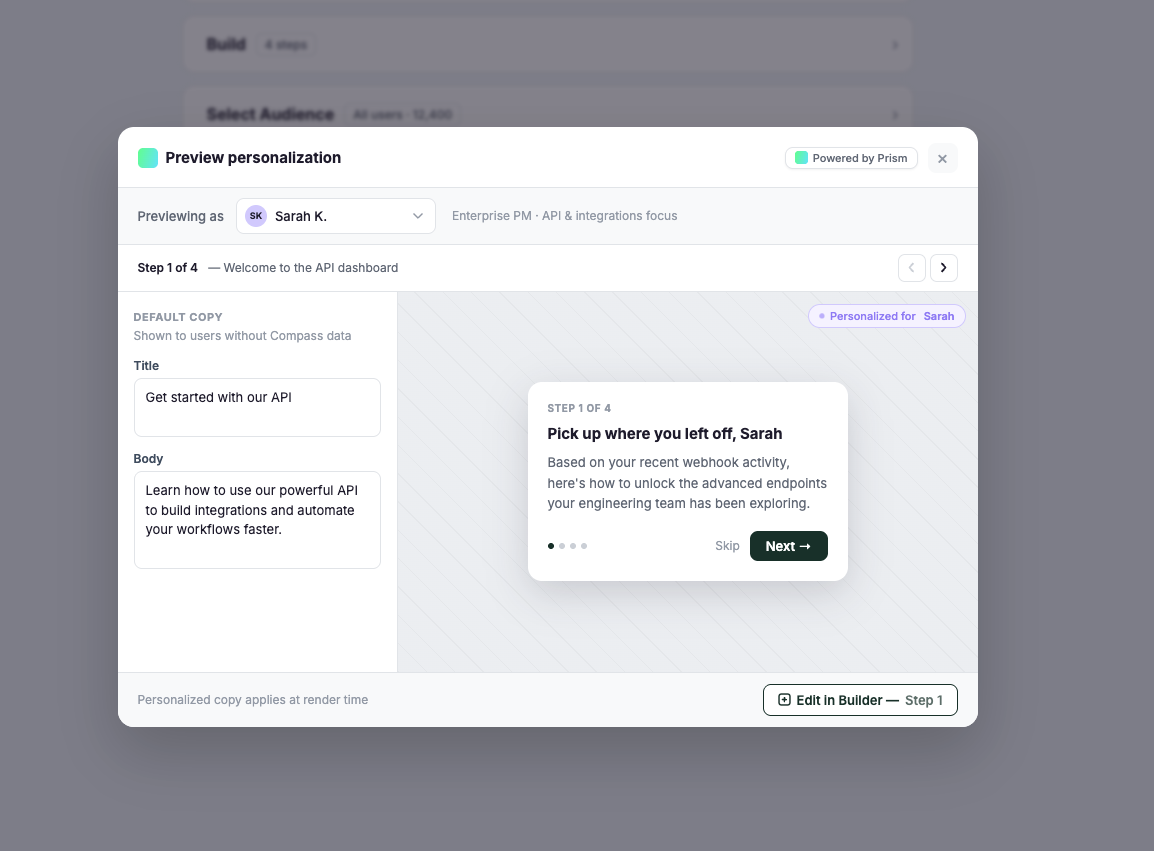
Admins write intent, not branches.
The old way to do "branching" surveys is a decision tree the admin maintains. That's a real product, but it's also a real maintenance burden, and admins under-use it because writing the tree is the hardest part of the job.
Adaptive Microsurveys flip the contract: the admin writes the opening question and a one-sentence follow-up intent ("if they said anything negative, ask what specifically broke"). The model handles phrasing. Admins review and approve the live phrasings the model produces during a sandbox phase.
The model wanted to keep asking.
The first internal demo had the right ergonomics and the wrong instinct. Given a useful answer, the model kept generating "one more good question" — and each one was reasonable in isolation. The cumulative effect was a five-question interrogation pretending to be a Microsurvey.
The fix wasn't a better prompt. It was a hard length cap (two follow-ups, no exceptions) and a visible "skip" affordance on every follow-up. Users behaved like they were choosing — not being chased.
The first version felt like talking to a clever colleague who didn't realize they were being clever for too long.
What the model is and isn't allowed to do.
- Hard cap: two follow-ups, ever. Configurable down (zero or one), never up.
- No new topics. Follow-up must be on the admin-written intent. If sentiment is unclear, model defaults to a clarifying restatement, not a fishing question.
- Skip is always visible. Not a dropdown — a real button next to "Continue."
- No PII probing. Lightweight server-side filter on generated phrasings. If a phrasing fails, fall back to a static follow-up.
- Offline fallback. If the model call fails or is slow, the survey ends gracefully on the first question — never a loading spinner.
The metric is the one nobody runs.
Response rate on Microsurveys is high already — the problem isn't engagement, it's actionability. So the test for Adaptive isn't "did more people answer." It's "did the answers our customers got tell them something they could do."
We're tracking it three ways: admin-reported actionability (a one-question survey on the admin side after results come in), follow-up answer length distribution, and "skipped follow-up" rate. The third one is the canary. A high skip rate on follow-ups means the model is asking the wrong question, full stop.
The shape of AI features I want to keep building.
The interesting design choice on this project wasn't the model — it was deciding that adaptive ≠ longer. Most AI feature ideas drift toward more: more answers, more turns, more text. The discipline is choosing where to cap, and then defending the cap when someone reasonable argues "but what if…"
I'm leaning hard on the principle that an AI feature should feel like a single confident colleague, not an eager intern. That gets you to "skip is always visible" faster than any user research.